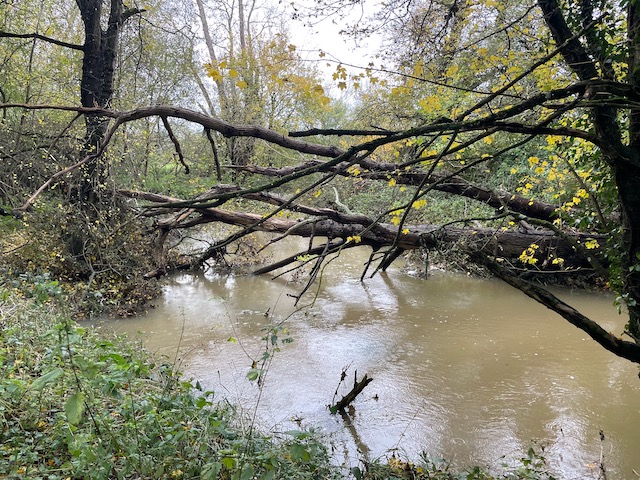
FoL Talk: The River Ouse: Current condition, pressures and what we’re doing about it – Ouse and Adur Rivers Trust – 20 February 2024

Tuesday 20 February 2024, 7:30 pm by ZOOM

With Peter King, Director of the Ouse and Adur Rivers Trust (OART).

The River Ouse catchment contains a diverse range of streams, brooks and lakes which flow through both urban and rural settings, offering different ecosystems and habitats for a variety of wildlife and a wonderful resources for people to enjoy. The Ouse and Adur Rivers Trust (OART) believe in the importance of understanding and data-drive science. Only by being out and about on the ground, collecting a variety of information and monitoring the condition of the Ouse can we focus our efforts where they are most effective.

In his talk Pete will provide an insightful overview of the river, the state it’s in, the pressures it’s under, and some of the solutions available including a summary of some of the projects OART has under taken in the Ouse catchment over the past few years and those planned for the future.

Photo: Courtesy of OART

This talk is free to members of the Friends of Lewes, and £4 to non-members. Non-members can buy a ticket (£4) from TicketSource, which will provide a link for this Zoom talk.

Members will receive an email with a Zoom link.

Please click on that link to attend the talk 5 minutes before it starts.

We would recommend a computer screen or an iPad as a minimum screen-size for viewing our Zoom talks.

Our presenters will be speaking live, and you can ask questions by typing in the Chat box in Zoom.

See the Diary page for a list of forthcoming events organised by the Friends of Lewes

Old Malling Farm Consultation

The planning application on Reserved Matters for Old Malling Farm, Old Malling Way, Lewes is currently open for consultation and the deadline has been extended to Friday 26th January.

The application is “for approval of scale, layout, external appearance and landscaping following grant of Outline Planning Permission for erection of 226 dwellings including affordable housing, public open space and associated infrastructure including vehicular and pedestrian access from Monks Way.”

The documents associated with the application can be found via the SDNPA’s Planning Portal by searching for application no. SDNP/18/06103/OUT. Anyone wishing to make representations can do so via the Public Access page (see Guidance).

Blake’s Walk – New Tree Management Plan

FoL’s Trees committee has been working closely with East Sussex Highways and others to develop an improved approach to the management of the trees along Blake’s Walk in South Malling. There had been a proposal for the poplar trees to be removed, but the new agreement is for the poplars to “be managed by pruning on a three yearly basis or as necessary” beginning with those on the east side in February 2023, with management of those on the west side planned for next winter.  More details are attached.

Have your say on Human Nature’s amended plans for Phoenix

The public consultation period for these revised plans began on 20 December, and runs until 22 January 2024.

A decision on the planning application was deferred at the South Downs National Park Authority’s Planning Committee meeting in October 2023. The amended plans include additional information to address issues raised at this meeting, including around highways and design. The application should go back to the South Downs National Park Authority’s Planning Committee in February 2024.

Read more at Sussex Express

The revised plans are on the SDNPA website, where the public is encouraged to add their comments.

Lewes Phoenix area
Lewes Phoenix, image: Google Maps


Become a Friend of Lewes


Lewes History Group talk: Exploring the Medieval History and Archaeology of Lewes Castle – Monday 8 January 2024, 7:20 for 7:30pm start

A Zoom Webinar

Arthur Redmonds: Exploring the Medieval History and Archaeology of Lewes Castle

The January Lewes History Group talk will look at the medieval history and archaeology of Lewes Castle in a range of contexts to explore its relationship with Lewes, and the surrounding Sussex countryside. The talk will also explore how it might have impacted and influenced the everyday lives of people around it.

As part of a PhD at the Universities of Exeter and Cardiff, Arthur Redmonds has been exploring how the medieval castle influenced those who experienced them within their localities and landscapes. Lewes is one of his urban case studies, and it plays a central role in the history and making of modern day Lewes. The talk will explore the impact of the castle on everyday life in the town, and Redmonds will briefly touch on some of the many sources and methods we might use to look at the medieval castle.

This talk will start with a brief look at how medieval castles operated, who worked within their lands and the types of sites and landscapes we might associate with them, before contextualising Lewes within the story of other castles both within Sussex and nationally.

Next, we will explore a biography of the castle, with the influence on the town and countryside explored at each stage of its life. This will include its construction, occupation, and finally its decline and partial abandonment. Along the way, we will briefly touch on some of the more important historical events in which the castle played a part, including its role in the 1264 battle of Lewes and its assault by peasants during the 1381 peasants revolt.

Lewes Castle Barbican, postcard
The Barbican at Lewes Castle, Photochrome Company postcard

To join this talk, you need to:

1) register your intention to attend in advance
2) receive LHG’s confirmation email with a link to the talk itself. Save that email, and
3) click on that emailed link to attend the talk 5 minutes before it starts

Lewes History Group Members can attend our talks for free. We will send members emails with a link to Zoom registration. Then please follow steps 1, 2, and 3 as above. 

Non-members can buy a ticket (£4) from TicketSourceThe ticket will provide a link to Zoom registration. Then please follow steps 1, 2, and 3 as above.

Please join the webinar at 7:25pm.

We would recommend a computer screen or an iPad as a minimum screen-size for viewing our webinars.

Our presenters will be speaking live, and you can ask questions by typing in the Q&A box in Zoom.

See the Talks page for a list of  forthcoming monthly events organised by the Lewes History Group.


Become a Friend of Lewes


Friends of Lewes plant trees on Offham Road and Brighton Road, December 2023

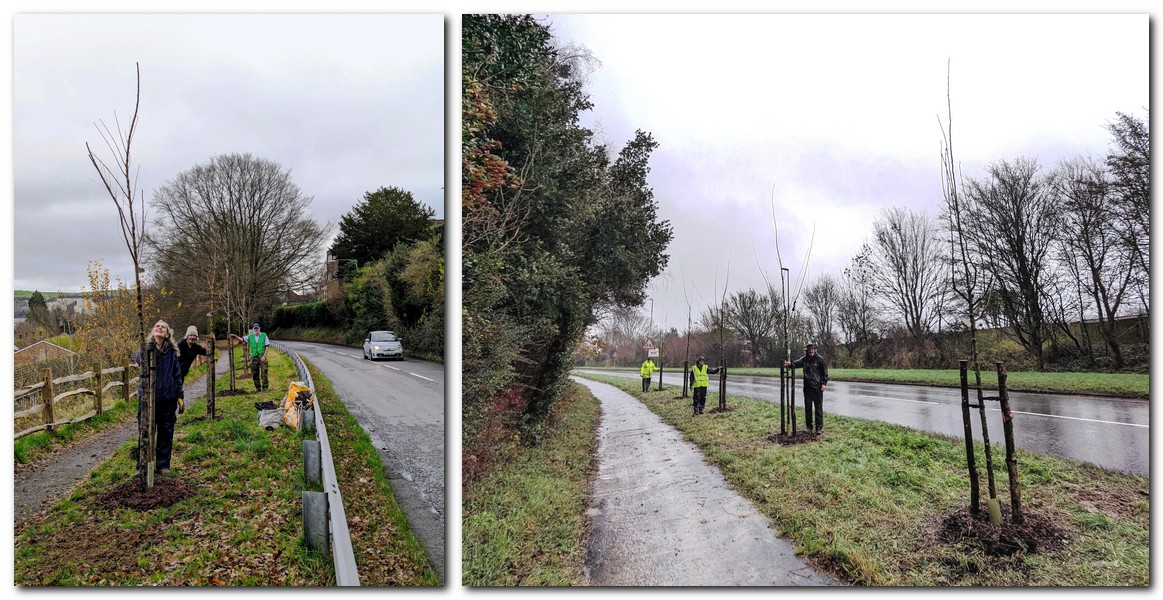
On Saturday 16th December, members of the Trees Committee planted seven trees beside Offham Road, near where the magnificent old Beech tree had to be felled. There are three Ulmus Lutece, (Elms), two Acer campestre, (Field Maple), and two Crataegus persimilis prunifolia, (Cockspurthorn). Thank you to East Sussex County Council for giving us planting permission. These trees are planted in memory of Paul Fouch and were sponsored by his family and friends.

Then, on 19th December, the Trees Committee met on at Brighton Road to plant five trees on the verge near the Hope in the Valley bus stop. The trees are three Ulmus Lutece, (Elms), and two Crataegus persimilis prunifolia, (Cockspurthorn).

Thank you again to East Sussex County Council for the planting permission. Thanks also to Trees Committee member Matthew of Bonny’s Wood for kindly sending a team to set up the barriers, lending their truck to bring the trees to the site, and then staying to help us to plant them.

Over November and December 2023 we have planted 51 trees altogether which brings the total number of street trees we have planted around Lewes since 2014 to 222.

Offham Road, and Brighton Road planting, all finished
Offham Road, and Brighton Road planting, December 2023


Become a Friend of Lewes


Friends of Lewes plant trees in Ham Lane, 9 December 2023

Another wet but enjoyable day for our fourth working party this season – in Ham Lane. We planted five Alnus glutinosa, (native Alders), and five Populus nigra, (Black Poplars), between the Scout Hut and the Cockshut.

At the same time, the 6th Lewes Beavers and Scouts were busy doing a great job of weeding and mulching their wildlife hedge of mixed native whips. Thank you very much to their parents and troop leaders for helping us to carry the trees and the mulch to where they were needed – and then sharing their soup with us!

Thanks again to Lewes District Council for the planting permission and to Matthew for all his patient work in CAT scanning each site.

Today’s team was Nick, Peter, Chris, Jill, Keith, Duncan, Jamie and Audrey. Well done everyone!

Tree planting at Ham Lane, December 2023
Tree planting at Ham Lane, 9 December 2023: team photo, and Audrey with the 200th tree, a Poplar


Become a Friend of Lewes


Nevill residents – Take part in the Storing the Storm Project!

Free Sustainable Drainage Systems (SuDS) for Nevill residents: part of the residential flood solution for Lewes

Do you live on the Nevill estate? We are offering a free SuDs rain-planter (complete with soil and ready to plant) to Nevill households who’d like to be part of a new project to sustainably manage heavy rainfall in order to reduce surface water flooding in Lewes. The ‘Storing the Storm’ project is run by the Ouse & Adur Rivers Trust, with support from Friends of Lewes, and funded by Lewes District Council. It aims to slow the flow of water entering the surface drains by capturing and storing rainfall.

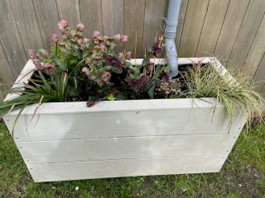
Sustainable urban Drainage System (SuDS) storm planter

The SuDS storm-planters on offer will be similar to the one shown above.

A quick guide to Sustainable Drainage Systems

The aim of Sustainable urban Drainage Systems (SuDS) is to manage rainfall close to where it falls, by allowing it to soak into the ground via vegetation, slowing the flow of surface water into the drainage system to lessen the risk of drainage and sewer flooding.

Rain-planters are one of the most inexpensive forms of SuDS. Also known as storm-planters or raingardens, these lined boxes are connected to a downpipe to receive and store rainwater from the roof. The planter is filled with layers of soil, sand and gravel which help to store the water and release it slowly through a perforated pipe in the planter base. This water can go back into the drain or simply infiltrate the ground, depending on where the planter is located.

Storm-planters can be safely sited by buildings, garages or sheds and come with many benefits – adding lush vegetation and colour to drives and patios, providing space for pollinators, plus you’ll be contributing to climate adaptation.

The 6 wonders of storm-planters

  1. Water collection: SuDS rain-planters have their impact right at the start of the rainwater journey. Positioned to collect water from a downpipe they capture rainfall that might otherwise run across hard surfaces like roads and pavements, collecting pollutants and overwhelming the drainage system.
  2. Filtration: As rainfall enters a rain-planter it passes through a layer of plant roots, soil and sand where pollutants are filtered out, so the water leaving the planter is cleaner.
  3. Storage: Hidden in the rain-planter’s base is a layer of gravel which stores the water in the spaces between the stones, releasing it slowly back into the environment. It is this slow and delayed release which helps lower the chance of local sewer systems becoming overwhelmed after heavy rain.
  4. Evapotranspiration: A certain volume of water never makes it out of the rain-planter. Instead, it is taken up by plants and returned to the atmosphere by evapotranspiration.
  5. Overflow: In extremely heavy storms your SuDS planter may become full. It has a built-in overflow pipe which return the water to the local drainage system.
  6. Biodiversity: As well as storing rainfall, the rain-planters become microhabitats in themselves, supporting wildlife including birds and insect pollinators.

Why you need a rain-planter

Lewes is a hotspot when it comes to flooding. Whilst some areas are at risk of flooding from the river, a bigger problem comes from the management of surface water, caused by both foul and surface water flooding when the piped drainage system is exceeded.

Unfortunately, evidence suggests that urban flooding will become more frequent due toe intense rainfall associated with climate change, and increasing impermeable surfaces in urban areas. Recognising these issues and starting to manage our own household rainfall more sustainably is one of the ways we can all take a small bit of responsibility and do something positive.

To reserve a planter or just to find out more contact: Rachel Paget at the Ouse & Adur Rivers Trust. Email: rachel.paget@oart.org.uk.


Become a Friend of Lewes


Friends of Lewes plant trees at Nevill Green, Houndean Rise, and Southdown Avenue

On Saturday 25th November, at the start of National Tree Week, the Arboretum team had a lovely day for planting ten more trees around Nevill Green. Six Ulmus Lutece, (Elms), have been planted on the other side of the hedge at the top of the bank alongside Nevill Road.

Near the play park area, there are now four new Crataegus persimilis prunifolia, (Cockspurthorn). One of them was sponsored by Lewes Footpaths Group in memory of the late John Vokins.

This completes the project we began in February 2023, when we planted nine other trees round the green. Thanks to all the team – and to Lewes District Council for the planting permission.

Crataegus, six Elms, Crataegus berries
Crataegus, Crataegus berries, six elms

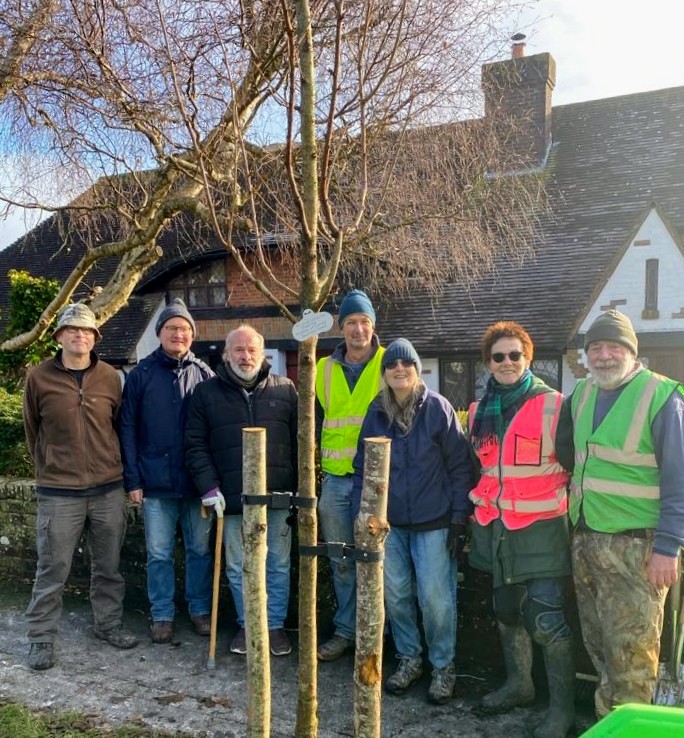
The Friends of Lewes Trees Committee planting teamOn Saturday 2nd December 2023, members of the Trees Committee planted five more trees in Houndean Rise and two in Southdown Avenue.

These trees complement the species planted there in 2018 and 2022: Liquidambar styraciflua Worplesdon, Acer campestre, Prunus Umeniko and Crataegus persimilis prunifolia.

Thank you to East Sussex CC for the planting permissions.

Trees Committee planting team, 2.12.23
Click images to enlarge


Become a Friend of Lewes